

To build the best feats for melee bard builds 5e offers, you must prioritize Concentration protection and Action Economy. Because Bards are full casters with d8 hit dice, your feats must transform you from a squishy performer into a durable “Gish” capable of maintaining high-level spells while trading blows. The gold standard for any melee Bard is War Caster, followed by Resilient (Constitution) and Mobile to ensure you stay upright and dangerous on the front lines.
Table of Contents
The melee Bard—typically a College of Swords or College of Valour specialist—is one of the most versatile archetypes in Dungeons & Dragons. However, playing one effectively is a “Gish Dilemma.” You are a full caster who wants to be in the thick of it, but your core mechanics are often at odds. You need Dexterity or Strength for your weapon attacks, Charisma for your Spell Save DC and Bardic Inspiration, and Constitution to survive the hits you will inevitably take.
Unlike a 5e Paladin, you don’t have heavy armour by default (unless you are a Valour Bard or mountain dwarf). Unlike a Rogue, you don’t have Cunning Action to Disengage for free. This means that the best feats for melee bard builds 5e provide are those that bridge these mechanical gaps, allowing you to survive the front line without sacrificing your identity as a world-class spellcaster.
Top Tier Feats: The Essentials
If you are looking to optimise, these are the non-negotiable selections. Without these, a melee Bard often feels like a caster who is simply “playing dress-up” in melee until they get hit once and lose their most important spell.
War Caster: The Crown Jewel
When discussing the best feats for melee bard builds 5e, War Caster is almost always the first recommendation. It solves three critical problems:
- Concentration: You get an advantage on Constitution saving throws to maintain spells. Since Bards often cast Slow, Hypnotic Pattern, or Bane and then jump into combat, this is vital.
- Somatic Components: It allows you to perform the somatic components of spells even when you have weapons or a shield in both hands. For a Valour Bard with a shield, this is a game-changer.
- Spell Opportunity Attacks: Instead of a simple rapier poke, you can blast a fleeing enemy with Dissonant Whispers or Hold Person.
Resilient (Constitution)
While War Caster provides advantage, Resilience (Con) provides a flat bonus via Proficiency. In the “Roleplay Mastery” of mechanical optimisation, this is a scaling investment. If you start with an odd Constitution score (e.g., 15), this feat rounds it up to 16, granting you more HP and a permanent +4 or +5 bonus to your saves by the mid-game.
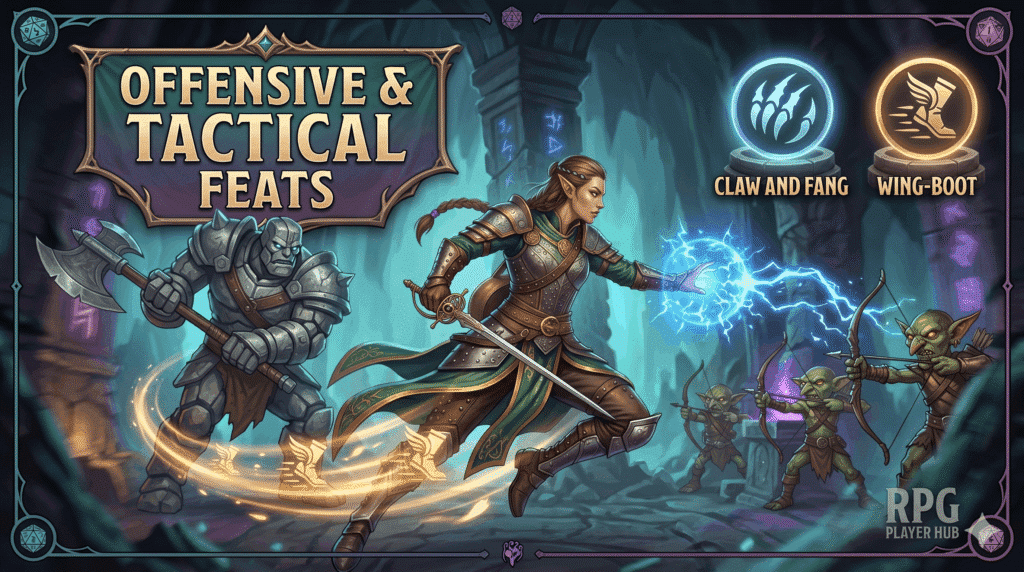
Offensive & Tactical Feats
Once your defences are stabilised, you can look at feats that improve your “threat needle”—your ability to influence the battlefield through movement and damage.
Mobile: The Evasive Tactician
The best feats for melee bard builds 5e often include Mobile, especially for the College of Swords. A Swords Bard can use “Defensive Flourish” to boost their AC and then use Mobile to walk away without drawing an opportunity attack. This “hit and run” style is often more effective than standing toe-to-toe with a Giant. The +10 feet of movement also ensures that your “theatre of the mind” or grid-based positioning is always superior to your enemies.
Fey Touched: Magic of the Feywild
Bards have a limited “Spells Known” list. Fey Touched is incredible because it gives you Misty Step (a premier escape tool) and a 1st-level spell—usually Bless or Silvery Barbs—without counting against your Bard limits. Plus, the +1 to Charisma helps you keep your Spell Save DC high while you’re busy taking combat feats.
Inspiring Leader
A veteran player knows that “Effective HP” is just as good as AC. With high Charisma, you can grant your entire party (and yourself) temporary hit points after every short rest. This effectively increases your d8 hit die to feel more like a d10 or d12, which is essential for surviving the high-damage tiers of play.
Niche & System-Specific Options
Depending on your table’s optimisation level, you might consider these specialised picks.
Elven Accuracy (Race-Specific)
If you are an Elf or Half-Elf, this is one of the best feats for melee bard builds 5e has for “Crit Fishing.” If you use Greater Invisibility (a Bard staple), you have permanent advantage. Elven Accuracy lets you roll three dice instead of two. This significantly increases your chances of landing a crit and doubling your Blade Flourish or Smite damage (if multiclassed).
Sentinel
For Valour Bards, you are often the “off-tank.” Sentinel allows you to lock enemies down, forcing them to deal with your high AC and potentially your Shield spell (if obtained via Magical Secrets) rather than squishier backline casters.
Feat Progression Path (Level 1–20)
Navigating the progression of a melee Bard requires discipline. Here is a professional-grade roadmap for selecting the best feats for melee bard builds 5e:
| Level | Priority Feat | Strategic Reasoning |
| 1 (V. Human) | War Caster | Start strong. Never lose concentration on Faerie Fire at early levels. |
| 4 | Fey Touched | Bump Charisma to 18 and add Misty Step for tactical repositioning. |
| 8 | Mobile | Transition into a “Skirmisher” role to avoid heavy multi-attacks. |
| 12 | Resilient (Con) | As monster DCs hit 17+, advantage isn’t enough; you need the Proficiency bonus. |
| 16 | Inspirational Leader | Buffer your party’s health for the end-game grind. |
Cross-System Perspective: Roleplay Mastery
In Pathfinder 2e, a “Melee Bard” (Warrior Muse) functions quite differently, focusing on “Composition Spells” to buff while attacking. In Star Wars FFG, this is akin to a “Force Sensitive Exile” who uses the “Enhance” power to jump into melee.
Universally, the lesson for “Roleplay Mastery” is this: A melee support character is only as good as their ability to stay on the field. If you fall unconscious, your buffs drop, and the party’s “force multiplier” vanishes. Choosing the best feats for melee bard builds 5e is not about being a “main tank”—it is about being a durable beacon of inspiration. For more on keeping combat fast and exciting, read our guide on the Combat Momentum Protocol.
The “Gish” Dilemma: Why Bards Need Feats More Than Others
When discussing the best feats for melee bard builds 5e, we must first understand why Bards are so uniquely dependent on them. A Fighter or Barbarian can function perfectly well from level 1 to 20 without ever taking a single feat, relying entirely on Ability Score Improvements (ASIs) to boost their raw numbers. A melee Bard does not have that luxury.
The core issue is the “Gish Dilemma.” You are attempting to perform two fundamentally different roles simultaneously: a frontline martial combatant and a full-progression spellcaster. The 5e system is not naturally designed to accommodate this without friction. When you cast a spell, you aren’t attacking. When you attack, you aren’t casting. When you get hit in melee, you risk losing concentration on the spell you just cast.
Feats are the mechanical bridge that solves this dilemma. They are the “glue” that holds the melee Bard concept together. Without the right feats, you are just a squishy caster standing too close to the monster, or a subpar martial character who occasionally remembers they have spell slots. With the right feats, you become a self-sufficient engine of destruction and control.
Multiclassing Considerations: The Hexblade Dip
It is impossible to talk about the best feats for melee bard builds 5e without addressing the elephant in the room: the Hexblade Warlock dip. Taking a single level of Hexblade fundamentally alters your feat progression and stat priorities.
If you take the Hexblade dip, you gain the “Hex Warrior” feature, allowing you to use your Charisma modifier for your attack and damage rolls with a one-handed weapon. You also gain proficiency with medium armour and shields, and access to the Shield spell. This dip is incredibly powerful because it makes you “Single Ability Dependent” (SAD). You no longer need to pump Dexterity to 20 to hit things; you can leave it at 14 and put everything into Charisma, freeing up your ASIs for essential feats like War Caster and Resilient (Con) much earlier.
However, if you choose to remain a pure Bard, you are “Multiple Ability Dependent” (MAD). You must balance increasing your Dexterity for attacks and AC with increasing your Charisma for spell saves, while still fitting in essential feats. In a pure Bard build, feats like Mobile become even more critical, as you cannot rely on the raw AC of a shield to protect you.
The “Trap” Feats to Avoid
Just as important as knowing the best feats for melee bard builds 5e is knowing which ones to avoid. The 5e system is full of “trap” options that look appealing on paper but fail to deliver in actual play.
Dual Wielder: Many players envision their College of Swords Bard as a whirling dervish with two scimitars. While thematic, the Dual Wielder feat is mathematically subpar. It consumes your bonus action — which you need for Bardic Inspiration or spells like Healing Word — and the +1 AC is worse than simply using a shield if proficient.
Savage Attacker: Rerolling weapon damage dice sounds great, but the mathematical increase is negligible, usually averaging +1 or +2 damage per turn. As a Bard, your damage comes from your spells, your flourishes, and your smites if multiclassed, not the base weapon die.
Tough: While extra hit points are always welcome, Tough does not protect your concentration. If you are choosing between Tough and Resilient (Con), Resilient is almost always the better choice for a caster. Maintaining a Hypnotic Pattern will save you far more effective HP than the Tough feat provides.
Subclass Synergies: Which Bard College Benefits Most from Melee Feats
When evaluating the best feats for melee bard builds 5e, it is crucial to understand that not all Bards are created equal on the front lines. Your choice of Bard College fundamentally dictates which feats will provide the highest return on investment. The two primary contenders for a melee build are the College of Swords and the College of Valour, though the College of Lore occasionally attempts to wade into the fray with mixed results.
The College of Swords is the quintessential “selfish” melee Bard. Their Blade Flourishes consume Bardic Inspiration to boost their own damage, mobility, and Armor Class. Because a Swords Bard relies heavily on Defensive Flourish to survive, they often find themselves in the thick of combat without a shield (as they only gain proficiency with medium armour and scimitars). For a Swords Bard, the Mobile feat is an absolute necessity. It allows you to dart in, execute a Flourish, and retreat without triggering opportunity attacks, effectively mitigating their lack of shield proficiency. Furthermore, because they are constantly attacking, feats like Fey Touched become invaluable for repositioning when surrounded.
Conversely, the College of Valour is the “team player” melee Bard. They gain proficiency with martial weapons, medium armour, and, crucially, shields. This innate shield proficiency drastically alters their feat priority. A Valour Bard does not need Mobile as desperately because their resting AC is significantly higher. Instead, War Caster becomes their undisputed top priority. With a weapon in one hand and a shield in the other, a Valour Bard literally cannot cast spells with somatic components like Cure Wounds or Hypnotic Pattern without War Caster. Additionally, because they are more likely to stand their ground and absorb hits, Resilient (Constitution) is vital for maintaining concentration on party-wide buffs.
Then there is the College of Lore. While traditionally a backline caster, some players attempt to build a “Lore Gish” by using Magical Secrets at level 6 to poach spells like Booming Blade or Spiritual Weapon. If you are attempting this unorthodox path, your feat selection must be entirely defensive. You lack medium armour and shield proficiency, making Moderately Armoured a mandatory first pick just to survive. Without it, you are simply a squishy target begging to be critically hit by a stray goblin arrow.
Ability Score Improvements vs Feats: The Eternal Debate
One of the most agonizing decisions any player faces is choosing between an Ability Score Improvement (ASI) and a feat. For a melee Bard, this debate is particularly brutal because you are inherently Multiple Ability Dependent (MAD). You need Charisma for your spells and Inspiration, Dexterity for your attacks and AC, and Constitution for your hit points and concentration saves.
The golden rule of 5e optimisation is that your primary casting stat should reach 20 as quickly as possible. However, for a melee Bard, I advocate for a slight deviation. At level 4, taking War Caster is almost always mathematically superior to bumping your Charisma from 16 to 18. The ability to maintain concentration on Faerie Fire or Bane while taking hits in melee provides far more value to your party than a +1 to your Spell Save DC.
Once War Caster is secured, the debate becomes murkier. If you are playing a pure Bard (without the Hexblade dip), you must prioritize your Dexterity to ensure your weapon attacks actually hit. In this scenario, taking an ASI at level 8 to boost Dexterity is often the correct choice. However, if you have taken the Hexblade dip and are attacking with Charisma, you can afford to take a “half-feat” like Fey Touched at level 8. This bumps your Charisma by +1 (ideally rounding out an odd score to 18) while providing the immense tactical utility of Misty Step.
By level 12, the math shifts again. Monster attack bonuses and spell save DCs scale aggressively in the third tier of play. At this point, a +2 to Charisma might seem tempting, but Resilient (Constitution) is often the superior choice. Surviving a dragon’s breath weapon and maintaining concentration on Animate Objects will swing an encounter far more effectively than a marginal increase to your own spell damage.
Real Table Examples: How These Feats Play Out in Practice
To truly appreciate the best feats for melee bard builds 5e, we must look beyond the theoretical math and examine how they function at an actual table. Let me share a scenario from a recent campaign that perfectly illustrates the power of a properly built melee Bard.
Our party was ambushed by a pack of Drow Elite Warriors. My character, a level 8 College of Swords Bard, was caught at the front of the marching order. On my first turn, I cast Hypnotic Pattern, catching three of the Drow in the area of effect. Because I had War Caster, I was confident in my ability to hold concentration even if I took a hit.
On the Drow’s turn, the captain charged me, landing a solid blow with his poisoned shortsword. The damage was significant, forcing a DC 15 Constitution saving throw. Thanks to the advantage provided by War Caster, I rolled a 14 and an 18, passing the save and keeping the Hypnotic Pattern active. Three enemies remained incapacitated, completely altering the action economy of the encounter.
On my next turn, I needed to reposition to heal our downed Rogue, but the Drow captain was still in my face. This is where the Mobile feat shined. I attacked the captain, using a Defensive Flourish to boost my AC to an untouchable 23. Because I made a melee attack against him, Mobile allowed me to walk away without provoking an opportunity attack. I used my remaining movement to reach the Rogue and cast Healing Word as a bonus action, bringing him back into the fight.
In just two rounds, the combination of War Caster and Mobile allowed me to lock down half the enemy force, survive a direct assault, reposition safely, and revive a teammate. A Fighter could have dealt more raw damage in that scenario, but only a properly feat-optimized melee Bard could have controlled the battlefield so completely while operating on the front lines. This is the true essence of the “Gish” playstyle: using your martial presence to enable your magical supremacy.
Best Feats For Melee Bard Builds 5e (FAQ)
Is War Caster or Resilience (Con) better for a Melee Bard?
For melee Bards, War Caster is usually the priority at level 4 because it allows you to cast with your hands full and provides the Opportunity Attack benefit. Resilient (Con) becomes better at level 12+ when your proficiency bonus is +4 or higher.
Can a Swords Bard use a shield?
Technically, no. The College of Swords only grants proficiency with Scimitars and Medium Armor. If you want a shield, you either need to play a Valour Bard, take the Moderately Armoured feat, or take a one-level dip into Fighter or Hexblade Warlock.
What is the “Hexblade Dip”, and do I need it?
A one-level dip into Hexblade Warlock allows you to use Charisma for your weapon attacks. While powerful, it delays your Bard progression. If you stay pure Bard, you must focus on Dexterity, making feats like Medium Armour Master or Mobile even more important.
How do I maintain Concentration in melee?
The combination of War Caster and Defensive Flourish (for Swords Bards) is the best way. The Flourish boosts your AC so you don’t get hit, and War Caster ensures that if you do get hit, you likely keep your spell.
Are there any “trap” feats for Bards?
Savage Attacker and Grappler are generally considered trap feats. As a Bard, your damage comes from your spells and flourishes; wasting a feat on minor weapon damage increases or grappling (which uses Athletics, a Strength skill) is inefficient.

Andragoras is a TTRPG veteran with over 30 years of experience behind the DM screen and as a player. Specialising in high-level mechanical optimisation and narrative table management, they have navigated systems from the early days of AD&D to the tactical depths of Pathfinder 2e and the narrative systems of Star Wars FFG. Their mission at RPG Player Hub is to help players and Game Masters master their craft through professional-grade guides and system-agnostic roleplay mastery.
3 responses